Custom
Twister Straps
Product Features
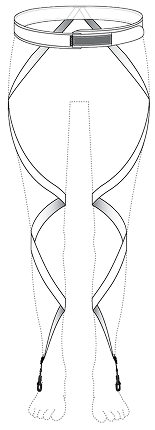
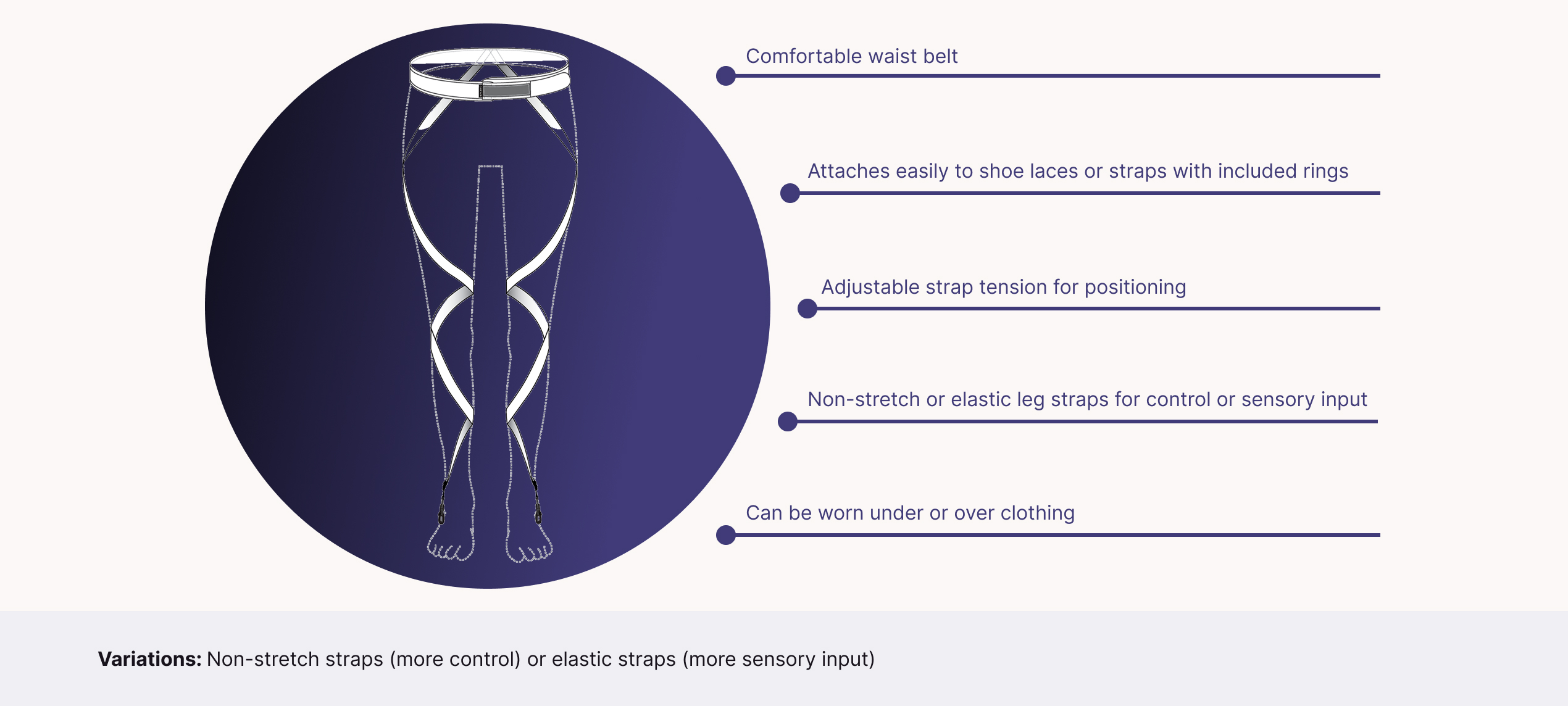
Designed to exert a counter-rotational force to the legs and feet to correct excess internal or external rotation of the femur and/or tibia
Sizing, Ordering & Fabrication for Twister Straps
Complete a custom order form for the patient's orthotic system.
Select the appropriate strap type and configuration.
Determine the preferred fitting and alignment setup.
Submit the order details for production and fitting.
Custom
Twister Straps
Dynamic rotational guidance for improved lower-extremity alignment.
Real World Outcomes of Twister Straps
In before-and-after assessments, patients wearing Twister Straps demonstrated:

Improved lower-extremity rotational alignment

Better consistency in guided movement patterns

Increased support for early-intervention alignment goals

Continued mobility without rigid joint immobilisation
Common Questions about Twister Straps
Twister Straps are designed for very young patients who show flexible internal or external rotation patterns of the femur or tibia and may benefit from guided correction.
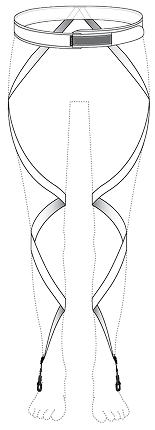
They apply a controlled counter-rotational force through a waist belt and leg straps that spiral down the legs and attach to the shoes, helping guide alignment without immobilising the joints.
No. They are not recommended for patients with fixed, bony rotational deformities or when the rotational issue does not primarily come from femoral or tibial rotation.
No. They are intended to guide rotational alignment dynamically while still allowing natural movement.
They can be used to address excessive internal or external rotation related to the femur and or tibia.
Twister Straps are available in non-stretch and elastic options. Non-stretch straps provide stronger control, while elastic straps offer more sensory input with less rigid correction.
They can be worn over clothing for easier donning and monitoring, or under clothing with leggings or tights for added comfort.